
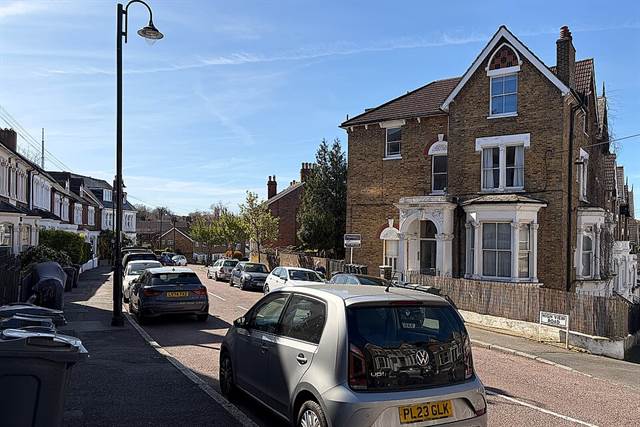
High View Road, Crystal Palace · Photo: Robin Stott, CC BY-SA 2.0
Ventilation & damp — Crystal Palace SE19, SE20, SE26
Ventilation on the ridge, where the wind decides where the air can leave
Crystal Palace sits on some of the highest ground in London. That is the view, and it is also the weather: the face of a house that takes the wind is pushed on all winter, and a terminal in the wrong place works against it every single day.
The homes here
Victorian houses on the highest ground in south London
Crystal Palace sits on the Norwood Ridge, which rises to more than 110 metres — among the highest ground in London. The houses came with the Palace, which stood here from 1854 to 1936: big Victorian villas and tall terraces, a great many of them divided into flats since.
Height brings wind. The face of a building that takes the weather up here is pushed on all winter, and a steep street means the back of a house can stand a storey higher above the ground than its front.
- On an exposed elevation the wind pushes back down a duct, so the terminal and its shutter have to suit the face it is on.
- Top-floor flats under steep roofs often cannot take a roof cowl, so the run goes to a wall instead and is designed for the extra length.
- The conservation areas decide which elevations a terminal may go on at all.
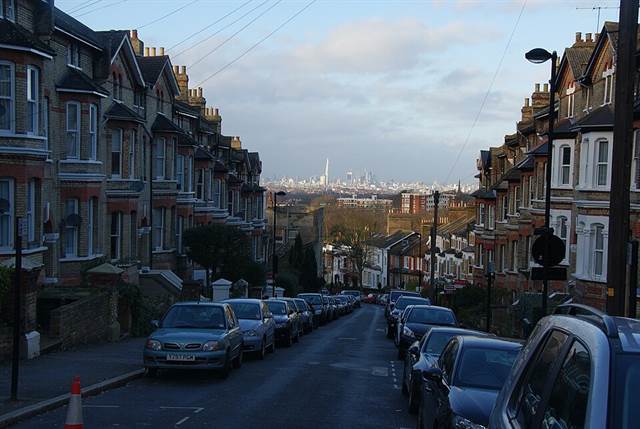
What height does to a terminal
Air leaving a house has to push out against whatever is on the other side of the terminal. On a sheltered street that is almost nothing. On an exposed elevation up here it is the wind — pressing on the face of the building that takes the weather, and pulling on the one in its lee.
That changes what a fan does. An extract terminal on the windward face has the wind pushing straight back down its duct: the fan moves less, a cheap shutter rattles open, and on a gusty night cold air comes in through the thing that was meant to take damp air out. The same fan on the sheltered side can run faster than it was ever set to. From inside the room they sound identical.
None of it is visible, which is why so many fans here are replaced for being “weak” when the fan was never the problem.
How we design for it
On exposed houses the terminal is the first decision, not the last — and the answer depends on the building, not on a catalogue.
Pick the face, not just the wall
Where there is a choice we terminate on the sheltered side, or tucked in where the building shields it, rather than on the face that takes the prevailing south-westerly. It can mean a slightly longer run; it almost always means a system that does what it says.
A shutter that shuts
A backdraught shutter matters more here than anywhere. Without one — or with a flimsy one — an exposed terminal lets the wind straight down the duct. We fit one that closes against a gust and does not chatter all night.
Continuous beats intermittent
A fan that runs all the time keeps a steady flow outwards, so a gust has less to push against. One that sits idle between showers is an open hole in the wall for most of the day. On the ridge that difference is felt, not just measured.
Top floors under steep roofs
Conversion flats in the roofs here often cannot take a roof cowl — the roof is too steep, or the conservation area rules it out — so the run goes across the roof void to a wall instead. It is longer and it is in cold air, so it is lagged and designed for the extra length rather than improvised on the day.
Measured, because you cannot hear the difference
A fan working against the wind sounds exactly like one that is working. The only way to know is to measure the air at the grille, so that is what we do on every job, and you get the figure in writing.
- If your fan rattles, whistles or lets cold air in when it is windy, the terminal or its shutter is the first suspect, not the fan.
- If it seems to work on calm days and not on wild ones, it is losing to the wind, and a bigger fan on the same terminal is money spent moving the problem.
- Much of Crystal Palace is in conservation areas, which decides which elevations a terminal may go on at all. We tell you where one will be visible before anything is ordered.
For a whole flat or house, a balanced heat recovery system brings air in and takes it out mechanically rather than relying on the weather to do half the job — which on an exposed, draughty building is part of its appeal. Whether it suits yours is a question for the survey.
Questions we get asked in Crystal Palace
Almost always because of the terminal outside rather than the fan. On an exposed elevation the wind pushes against the terminal and down the duct, and a shutter that is missing, broken or too light lets it through — so the fan chatters and cold air comes in whenever the fan is off. A proper backdraught shutter, a terminal suited to the face it is on, or moving the terminal to a sheltered elevation fixes it. A fan that runs continuously also helps, because it keeps the air moving outwards.
Because it is. Wind pressure on the terminal pushes against what the fan is trying to do, and a small fan on a long duct has very little pressure to spare. From inside the room it sounds the same either way, which is why this gets blamed on the fan. We measure the flow at the grille, pick a fan with enough pressure for the actual run, and put the terminal where the wind is not working against it.
Often not — the roof is too steep, or a cowl on a visible roof slope is not something the conservation area allows. The usual answer is a terminal on a permitted wall instead, which means a longer run through the roof void. Because that run is in cold air it is insulated, so the moisture does not condense inside it, and the fan is chosen for the extra length. We tell you where the terminal will show before anything is ordered.
It can be. A heat recovery system supplies and extracts air mechanically and in balance, so the home is not relying on the wind to bring air in, and it keeps most of the warmth that an extract fan would throw away. On an exposed, draughty house that is part of its appeal. Whether it is right for yours depends on how airtight the building is and where the ducts could go, which is what the survey is for.
Not sure where to start?
Send us a message with what you have noticed at home. We will tell you honestly whether you need a survey, a system, or neither.
Or see what it costs — unlike most in this trade, we publish our prices.
Trained on the systems we install
Certificated — and here they are
Most trade sites show you a row of logos. These are the actual certificates, both sat in August 2026. Tap either one to read it, or download the PDF.
- 12-month workmanship guarantee On top of the manufacturer’s warranty, which we register in your name. If anything we installed fails because of the way we installed it, we come back and put it right. What it covers.
- Company no. 12092552 Registered in England & Wales. Trading as Cavalli Ventilation since July 2019, and in ventilation since 2003.
- Airflow measured on every install A calibrated anemometer at the grille, recorded and handed over. The only figure that counts is the one measured in your room.